Mental Health & Emotional Wellbeing: Why Awareness and Support Matter
Mental Health & Emotional Wellbeing: Why Awareness and Support Matter
Mental health and emotional wellbeing are important parts of a healthy and balanced life. People of all ages may experience stress, emotional challenges, pressure, uncertainty or difficult life situations. Awareness, understanding and appropriate support can help individuals manage these challenges more effectively.
Promoting mental health and emotional wellbeing means creating spaces where people feel safe to communicate, seek support and develop healthy ways of understanding and managing their emotions.
Why Mental Health and Emotional Wellbeing Matter
Emotional wellbeing can influence how individuals think, feel, learn, work and interact with others. Children, young people, parents, teachers, employees and community members may all experience different forms of emotional pressure during their lives.
Awareness can help people recognise when they or someone around them may need additional support.
Common Factors That Can Affect Emotional Wellbeing
Several situations may affect mental health and emotional wellbeing, including:
- Academic or workplace pressure
- Family or relationship challenges
- Social isolation
- Bullying or harassment
- Financial stress
- Major life changes
- Loss or difficult experiences
- Excessive digital exposure
- Lack of communication and emotional support
Every individual may respond differently to difficult situations, which is why empathy and understanding are important.
The Importance of Emotional Awareness
Understanding emotions can help individuals respond to situations in healthier and more constructive ways. Emotional awareness may include:
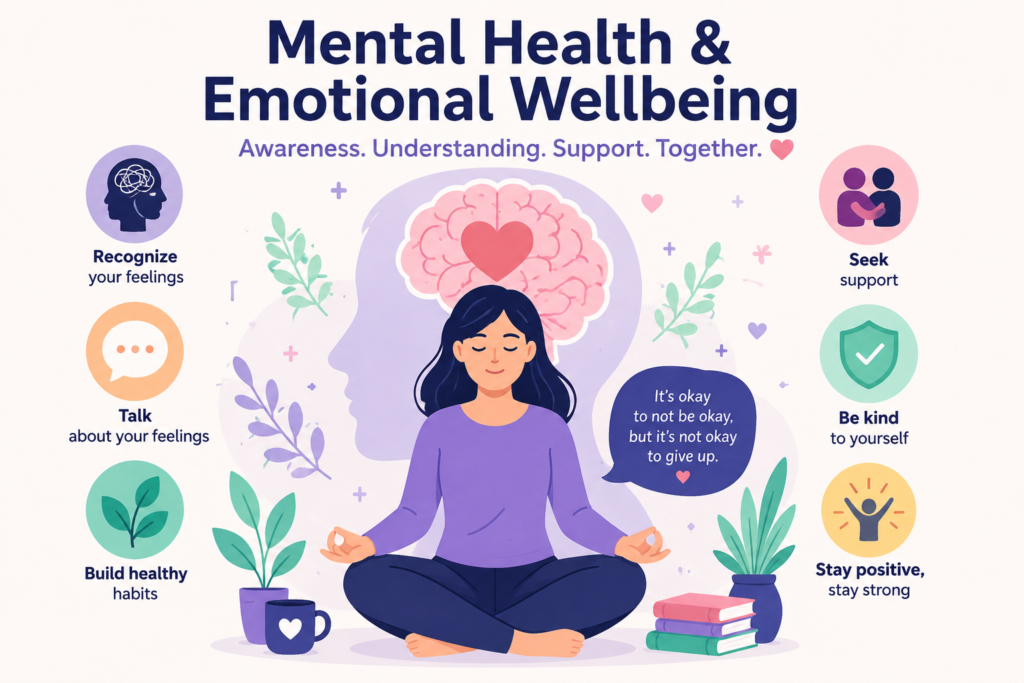
Recognising Feelings
Learning to identify emotions such as stress, fear, sadness, anger or anxiety can be an important first step.
Communicating Openly
Speaking with a trusted family member, friend, teacher, colleague or appropriate support professional can help individuals feel heard and supported.
Building Healthy Coping Skills
Simple practices such as maintaining routines, physical activity, rest, meaningful social connections and healthy communication may support overall emotional wellbeing.
Creating Supportive Environments
Schools, workplaces, families and communities can encourage respectful communication and create environments where people feel comfortable seeking appropriate support.
Supporting Children and Young People
Children and young people may not always express emotional difficulties directly. Adults can support them by listening without judgement, encouraging open communication and paying attention to significant changes in behaviour or wellbeing.
Awareness and life skills education can help young people build emotional understanding, resilience and healthier ways of responding to challenges.
Mental Health Awareness Is a Shared Responsibility
Mental health and emotional wellbeing should not be viewed as an individual concern alone. Families, educational institutions, workplaces and communities can all contribute to creating supportive and respectful environments.
Promoting awareness can help reduce stigma and encourage people to seek appropriate support when needed.
Creating More Supportive Communities
At Sewa Bhav Foundation, awareness and wellbeing initiatives aim to encourage communication, emotional understanding, life skills and supportive community environments.
By promoting mental health and emotional wellbeing awareness, we can work towards communities where individuals feel respected, heard and supported.
Awareness, empathy and timely support can help create healthier and more resilient communities.