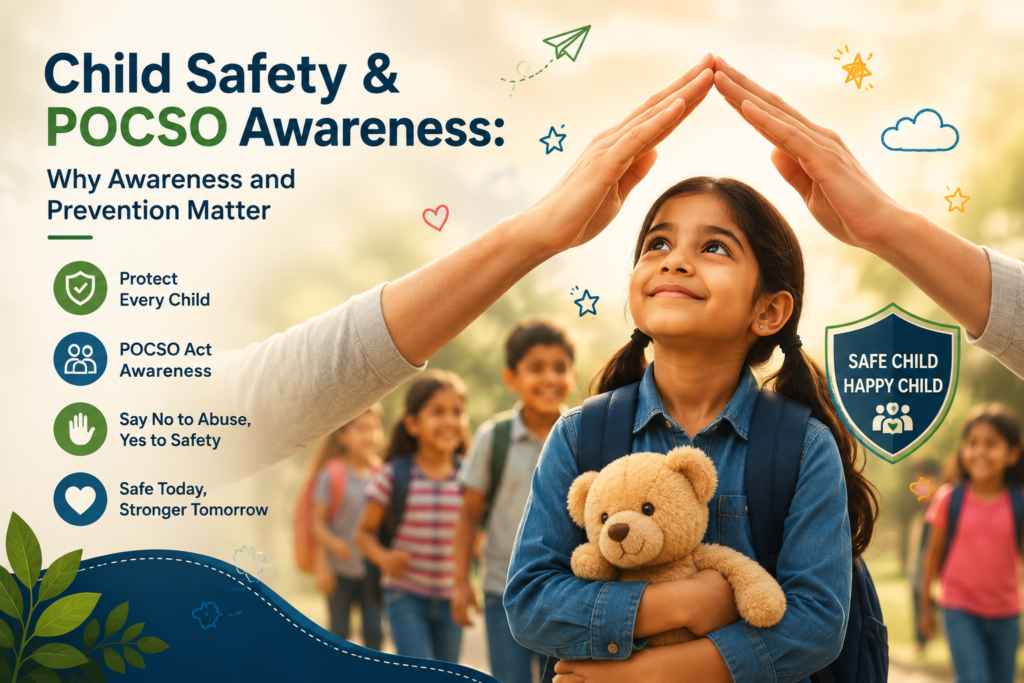
Child Safety & POCSO Awareness: Why Awareness and Prevention Matter
Child Safety & POCSO Awareness: Why Awareness and Prevention Matter
Children deserve to grow, learn and participate in environments where they feel safe, respected and supported. Creating such environments requires awareness, responsible behaviour and a shared understanding of child safety.
Child safety is not the responsibility of one person or institution alone. Parents, teachers, caregivers, communities and institutions all have an important role in promoting awareness and creating safer spaces for children.
Understanding Child Safety
Child safety involves creating an environment where children are protected from harm, abuse, exploitation and unsafe situations. It also includes helping children understand personal safety, appropriate boundaries and the importance of seeking help from trusted adults when they feel unsafe.
Awareness can help children and adults recognise concerns early and respond responsibly.
What Is POCSO Awareness?
POCSO awareness refers to understanding child protection and the importance of preventing sexual offences against children.
Awareness sessions can help parents, teachers, caregivers and other stakeholders understand the importance of child protection, safe behaviour, appropriate boundaries and responsible action.
The purpose of awareness is not to create fear. It is to promote understanding, prevention and a culture where children’s safety and dignity are respected.
Why Awareness and Prevention Matter
Prevention begins with awareness.
When children and adults have age-appropriate knowledge about safety and personal boundaries, they may be better prepared to recognise uncomfortable or unsafe situations and seek appropriate support.
Awareness can also encourage adults and institutions to strengthen their understanding of child protection responsibilities and create safer environments.
Important Areas of Child Safety Awareness
Child safety awareness programs may cover topics such as:
- Personal safety and age-appropriate safety awareness
- Understanding safe and unsafe situations
- Appropriate personal boundaries
- Recognising uncomfortable behaviour
- The importance of trusted adults and support systems
- Safe communication and responsible behaviour
- Digital safety and online awareness
- Creating child-friendly and respectful environments
The Role of Parents and Caregivers
Parents and caregivers play an important role in helping children feel safe and heard.
Children should feel comfortable communicating their concerns without fear or unnecessary judgement. Open communication, active listening and age-appropriate guidance can help build trust between children and adults.
Parents and caregivers can also support child safety by paying attention to changes in behaviour and encouraging children to seek help whenever they feel uncomfortable or unsafe.
The Role of Schools and Educational Institutions
Schools and educational institutions can contribute significantly towards child safety by promoting awareness among students, teachers and staff.
A child-friendly environment can be strengthened through:
- Regular child safety awareness initiatives
- Age-appropriate sessions for students
- Awareness and capacity building for teachers and staff
- Clear child protection procedures
- Responsible communication and reporting mechanisms
- Creating an environment where children feel safe to seek support
Child Safety in the Digital World
Children today spend increasing amounts of time online for education, communication and entertainment. Digital awareness has therefore become an important part of child safety.
Children and families can benefit from awareness about:
- Safe online behaviour
- Privacy and responsible sharing of information
- Communicating safely online
- Recognising potentially harmful or inappropriate interactions
- Seeking help from trusted adults when needed
Digital safety should be approached through awareness and guidance rather than fear.
Building Safer Communities for Children
Child protection is strengthened when families, schools, communities and institutions work together.
Awareness programs, open communication, responsible safeguarding practices and appropriate support systems can contribute towards safer environments for children.
Every stakeholder has a role in ensuring that children’s safety, dignity and wellbeing remain a priority.
How Sewa Bhav Foundation Supports Child Safety Awareness
Sewa Bhav Foundation works to promote awareness, education and capacity building related to child safety and protection.
Depending on the needs of schools, institutions and communities, awareness initiatives may include sessions for children, parents, teachers, caregivers and other stakeholders.
Our approach focuses on creating age-appropriate awareness, encouraging responsible behaviour and supporting conversations around safety, dignity and wellbeing.
Conclusion
Creating safer environments for children requires continuous awareness and collective responsibility.
By encouraging open communication, strengthening awareness and promoting responsible safeguarding practices, families, institutions and communities can work together to support the safety and wellbeing of every child.
Awareness is an important step towards prevention, protection and a safer future for children.